
Separation Anxiety Files Episode 2 | The ‘other’ type of Separation Anxiety
When people say that their dog has Separation Anxiety, what they think they’re treating is called “True Separation Anxiety”. But most of the time, what they actually have is something else.
The skirting board in shreds, the scratched door or the blinds pulled apart - thats all good proper True Separation Anxiety stuff. But most dogs don’t do that. Most of them just bark. A lot. As in, the neighbour has started mentioning it on the drive in that super polite, definitely not a problem, totally fine, barely hear it, ‘but we will anonymously report you to the council if you don’t sort it’ type of way.
And the challenge is, if you dont know what you’re dealing with - what we call “Learned Separation Anxiety” or “False Separation Anxiety” - then you’ll end up treating the wrong issue, and getting absolutely nowhere. So in this article, I want to teach you how to identify what type of Separation Anxiety you’ve got, and what to do about it.
Let’s Define our Terms
True Separation Anxiety is a relaxation problem.
We define True Separation Anxiety as “The inability for a dog to relax, rest or sleep outside of their owner's Personal or Intimate Space.”
That's it, nail on the head. Not "misses you." Not "loves you a bit too much." A dog with True Separation Anxiety physically cannot switch off unless you are close — within a metre, or close enough to touch. You are not company to this dog. You are a condition for relaxation, the same way a dark room and a quiet house are conditions for your own. Take the condition away and the dog cannot switch off, the same way you can't drop off with the big light on and the TV blaring.
True Separation Anxiety is also characterised by dogs that are stuck in a state of constantly following their owners - and symptomatically when they are left alone, they can be destructive, they can show physiological stress (panting, drooling, toileting) and if they are vocalising, it is typically panicked or hysterical.
Learned Separation Anxiety is a boundaries problem.
We define Learned Separation Anxiety as “The behaviours a dog learns and practises to resolve a physical or psychological boundary.”
Understanding this is a bit more fiddly, but its actually a really simple concept. Learned separation anxiety is all about the behaviours that work. The things you have taught your dog, through accidental trial and error, that make good things happen for them. What they do that gets you to open a door, let them out of a crate, gets greeting or affection, gets them picked up or carried up and down the stairs — basically the dog equivalent of someone who has learned to demand versus someone who has learned to say please and thank you. This is why most learned separation anxiety is categorised by vocalisation and noise, and not a lot else — because those are the things that most people respond to. And the more you respond, the more they learn that it works, and the more they practise the same behaviour when you leave. Sometimes, you do see dogs with learned separation anxiety ragging on your favourite cushions or turning their bed into candy floss (cotton candy for the Americans in the room) - but most of the time, they practice the same behaviours you’d see when you come home and greet them, or when they first wake up in the morning.
Most dogs have the Learned Kind. Very Few have True Separation Anxiety.
The vast majority of dogs sent to me as "separation anxiety" cases have the learned kind. They relax perfectly happily on their own, right up until someone shuts a door in their face - then they start singing the song of their people so the whole street can hear.
Why? Because then you’ll come back - they’ll get a big excited greeting, and a veritable shit ton of that old behaviourist favourite “positive reinforcement” - for the exact state of mind and behaviour you dont want to nurture. So they learn to stay excited, stay fixated on the door, and keep vocalising - because thats what worked the last time.
True Separation Anxiety on its own is genuinely uncommon. It happens, and when it does it usually correlates to a more sensitive dog short of confidence to begin with. Most dogs with true separation anxiety also have elements of learned behaviour - but the most common form of Separation Anxiety people deal with, isn’t True Separation Anxiety at all - its all learned behaviour in an otherwise confident and relaxed dog.
Good diagnosis decides where your time goes.
Get the type wrong and everything downstream is wrong, because the two are fixed by nearly opposite work.
A True Separation Anxiety dog needs to learn to relax at distance — to hold his own calm while you move further off, for longer. The first skill is place work: settle on a bed, stay settled, while the kettle goes on and the washing gets hung and you wander in and out. It's in the members' library, and it's day one for these dogs.
A Learned Separation Anxiety usually already does all of that. They can already relax - they proved it ten minutes before you picked up your keys. What they need is to learn that the noise doesn't work anymore, and that the calmness they practice the rest of the time is what is expected when you come home - that excitement won’t be engaged with (or nurtured by the owners!) Put simply, if you spend all of your time doing place-work with a dog that needs threshold work, you'll both try very hard and get nowhere.
Get your diagnosis right before you start.
Know the answer to the big question. Which type have I got? Answer that honestly and the work picks itself. Get it wrong and you can do everything right — every session, every rep, faithfully — and still be standing on the doorstep in six months counting to thirty. It’s the first thing we look at in my Separation Anxiety Programme.
-
Inability to relax outside of their owner's Personal or Intimate Space.
Demonstrate a range of physiological and psychological stressors. Whining, crying, drooling, panting, pacing, toilet accidents.
May be destructive, particularly around the door, windows and blinds.
Typically, but not always, lower in confidence and demonstrate other fears and anxieties.
-
Demonstrate relaxation in the owners social and public space, and on their own (without withdrawing to places to hide). Often sleep independently overnight.
Highly excitable when greeting in a morning or at the door.
Typically only demonstrate vocalisation as a symptom - usually yapping or barking.
Rarely destructive unless under exercised.
Typically, but not always, higher in confidence and demonstrate more pushy or competitive behaviour. May also present possessive or territorial traits.
For the people who have both.
If you have both, you have True Separation Anxiety with added sprinkles or Learned Separation Anxiety. The true Separation Anxiety is the bigger beast, takes more time, and is a prerequisite to working through issues at the door.
Start with the True Separation Anxiety. It's underneath everything — a dog who can't be calm on his own can't learn to be calm at a threshold, because there's no calm there yet to work with. Build that first. Get him relaxing in his own space, in his own company, you in another room, then any room, then sleeping independently - then worry about being out of the house. Once that's in place the barking is a much smaller job — a habit on top of a dog who's now fundamentally alright, rather than another layer of symptoms on top of everything else they can’t do.
Relaxation first. The door second. In that order, every time.
Separation Anxiety - Videos for Members
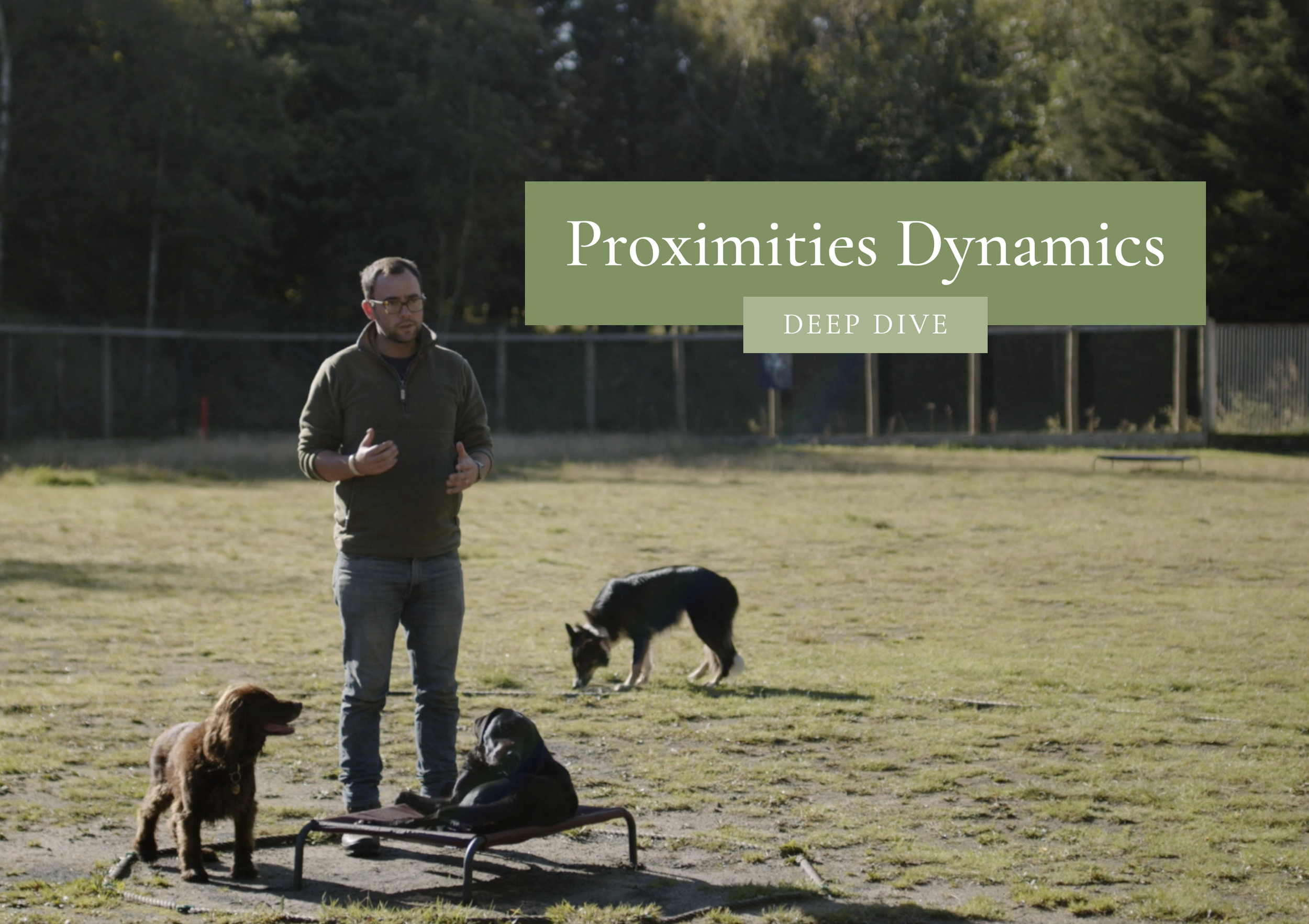
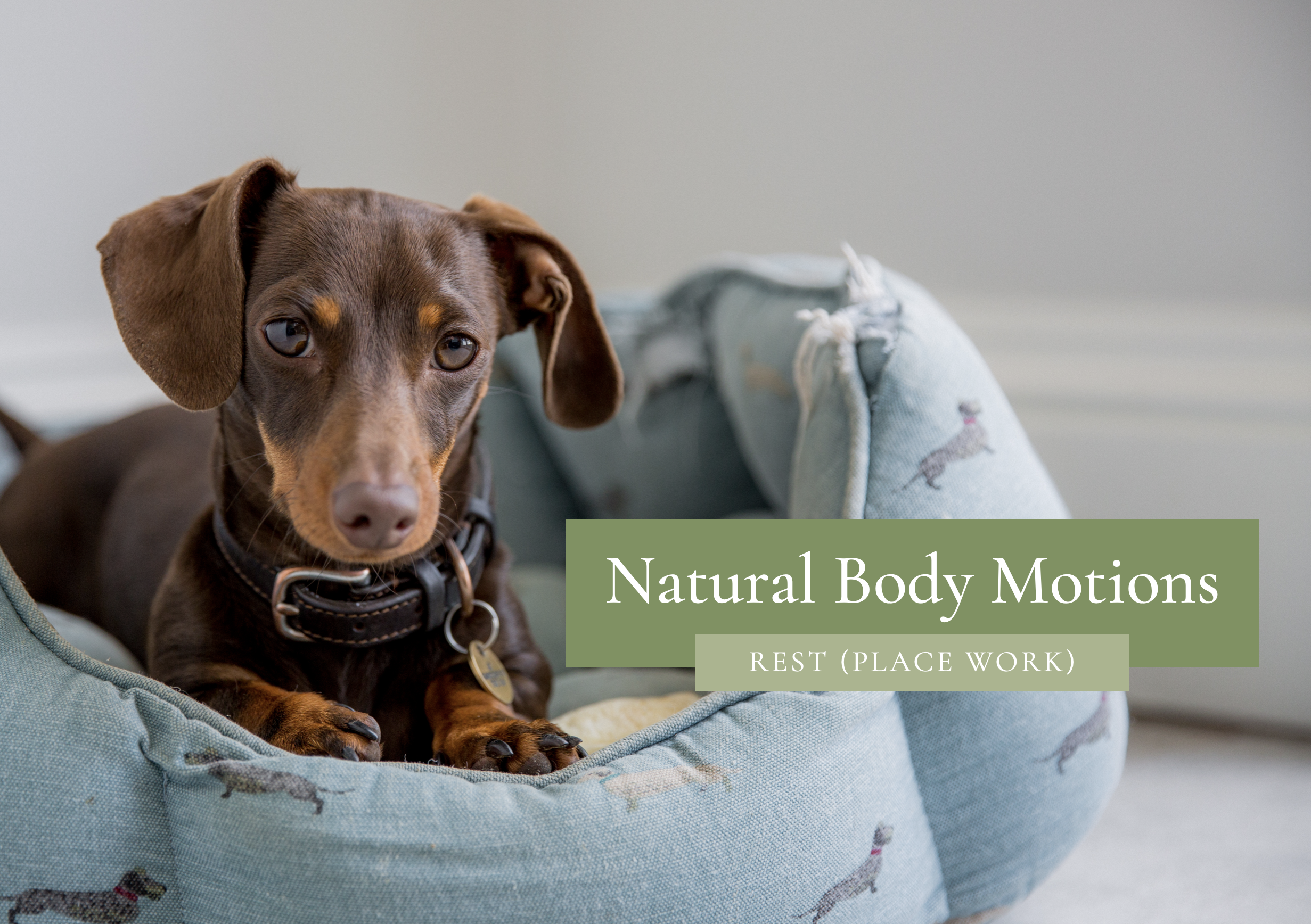


When it comes to leaving and exiting the crate, the key word is calmness. One of the main habits that puppies get into is barking and being very excited and frustrated in order to get out of the crate, and when we let our puppies out in a rush, we build this bad habit over time. In this video, we begin to introduce the idea of how to come out of the crate calmly, using a place imprint.
When it comes to leaving and exiting the crate, the key word is calmness. One of the main habits that puppies get into is barking and being very excited and frustrated in order to get out of the crate, and when we let our puppies out in a rush, we build this bad habit over time. In this video, we begin to introduce the idea of how to come out of the crate calmly, using a place imprint.