
Case Profile: The Cockapoo
In this case profile, we revisit one of the most popular groups of dogs on the planet, and one of the types of dogs that we see most often for behavioural issues - the poodle crosses. I’m talking Cockapoo’s, Cavapoo’s, Australian Labradoodles, Goldendoodles - and all the people who didn’t realise that “hypoallergenic” comes with the small print of “vocal, high energy biting dog”.
Let’s take some time to breakdown the doodle dogs.
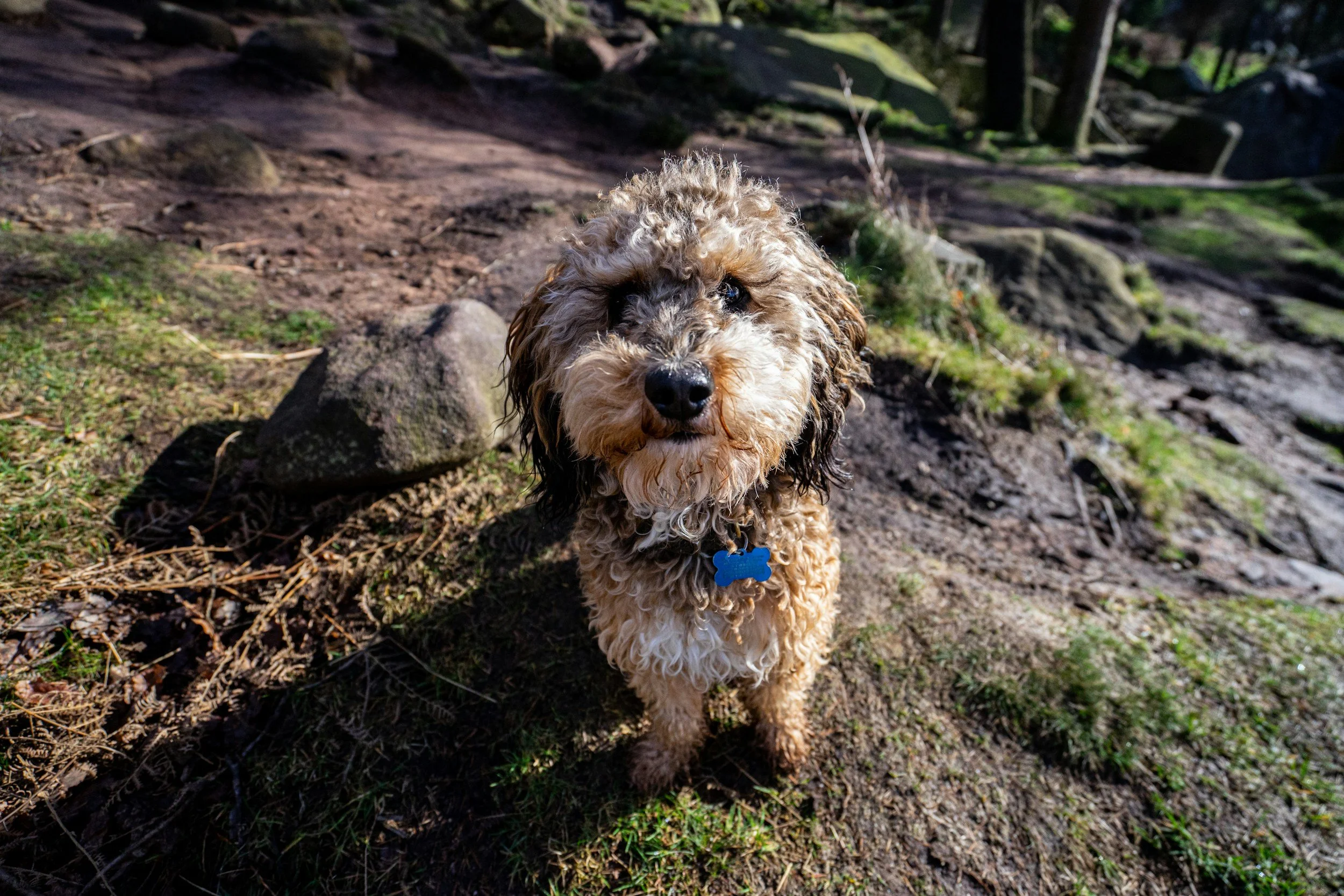
BREED(S): Cockapoo, Sprockerpoo, Cavapoo, Cavapoochon, Australian Labradoodle, Labradoodle, Bernedoodle, Goldendoodle.
Owners most commonly see me for: Vocal reactivity, overstimulation, Resource Guarding, Separation Anxiety.
Most Common symptoms include: Vocal barking and lunging, over excited jumping and barking, grabbing at people and clothes, overstimulation around touch interactions and food.
Occasional symptoms include: High levels of fear and anxiety, aggression towards family members or territorial aggression.
Case Breakdown: It would seem odd that such a large and genetically diverse group of dogs would have such a common set of issues. After all, whilst technically the poodle is a common breed denominator, that doesn’t necessarily mean that it is the genetically predominant dog in many of the poodle cross dogs that we work with. So what is it that all of these dogs have in common? Their owners.
Fundamentally the thing that all of these dogs have in common is that they are sold as suitable for families and first time dog owners, which as a demographic tend to behave in a similar way with their dogs, and follow a similar training funnel that results in most of the issues that we see as professional behaviour specialists. In essence, the poodle cross represents “all of the things that go wrong if you follow the standardised status quo training process”.
The mistakes follow a common pattern:
Buy a dog on the basis of breed, primarily for its aesthetics and secondarily for its breed stereotype, rather than focusing on the genetics of the parents and the temperament of the individual dog within the litter. (This ends up creating a mismatch or variable incompatibility between what the owner needs and the personality of the dog, e.g a nervous dog in a busy family, a high energy hunting dog for an older retiree, a pushy or overly confident dog with anxious inexperienced owners).
Overwhelm the dog with very high levels of excitement and overly zealous physical affection, during the first hours, days and weeks of owning a new puppy (first time dog owners and children are very good at this!) resulting in an imprint where family represents overwhelming and uncomfortable levels of excitement and invasion of space - that in the long term, your dog will lose tolerance for and struggle to regulate.
Make the mistake of limiting your dogs exercise to 5 minutes for every month of their age to limit the risk of injury - and overly managing everything they do and everything they put in their mouths. This causes two problems - a severe lack of exercise leading to a pressure build with a young dog that gets increasingly frustrated, and paranoid owners that snatch everything off their young dog and begin to sow the seeds of resource guarding behaviour.
Sign a 3-6 month old puppy up for 6 weeks of puppy classes in the local hall, with an inexperienced ‘hobby’ dog trainer that introduces extremely high and overwhelming levels of stimulation as ‘normal’ - dogs climbing and jumping all over each other, giving the dogs lots of food for everything, talking in a high pitched voice, being overexcited - with a breed predisposed to being excitable and overstimulated.
It is the combination of all of the above that set an unhealthy foundation which rapidly becomes unmanageable as young dogs pass into adolescence, and where the problematic results of that that same poor foundation begin to rear their heads. If poodle cross breeds share one thing in common, it is that they are not resilient to emotional inconsistency - whether that takes the form of over excitement, frustration, uncertainty of anxiety - they absorb it all and respond negatively to it.
Dogs are psychologically very different to people, in a great many ways - and our dogs ability to understand, mirror and accommodate for us does not make them the same. And doodles are not the most forgiving when it comes to not understanding dog psychology.
No, your Doodle is not a Tiny Human
For all the ways in which doodles may seem to be highly designed for their compatibility with people and human centric personalities, it is a fatal flaw to be so disrespectful as to not treat them as dogs. Dogs are psychologically very different to people, in a great many ways - and our dogs ability to understand, mirror and accommodate for us does not make them the same. And doodles are not the most forgiving when it comes to not understanding dog psychology. You must learn with any dog to control your energy and body language, express yourself mindfully, manage and claim your space, negotiate silently. You must learn to understand how dogs perceive patterns and associations, and how they navigate the world as predatory animals. More often than not, doodles go through a training process that hinges on the same principles that taught Sealions and Dolphins to balance balls on their noses and jump through hoops - and these are not processes that have any respect for the animals psychological wellbeing. So - learn dog psychology, and how your doodle perceives the world.

No, Excitement is not Happiness. No, your dog doesn’t have ADHD. They’re overstimulated, stressed out, and addicted to excessive ‘drip-fed’ reinforcement.
Most of the ‘excitement’ that we see dogs practice is either a mask for high levels of stress and anxiety, or neurotic, pushy, demanding behaviour. It is not normal or healthy for a dog to exist at high levels of over excitement on a regular basis, any more than someone who lives off energy drinks to get through the day. The psychological, physiological and emotional strain of overstimulation its something that moat doodles struggle with a great deal, and the truth is that more often than not, its a mirror of the environment they are living in. Constant excited touch, constant treats, constant anxiety and excitement in the way we talk.
Detox Your Doodle to discover their personality.
There are three key things that doodles often receive in excess, to the point that it can have a marked negative effect on their psychology - food, excitement and affection. Many of these dogs have been so overwhelmed from such a young age that few owners have any idea how different their dog could be. If your dog lives in excess, practice the following:
24 Hours of silence. This maybe sounds extreme, and very difficult - but for 24 hours, don’t use sound to communicate with your dog. Humans are SO noisy - and you’ll be amazed how much of an impact it has on their behaviour.
2 weeks without treats. I know - also sounds crazy. But stay with me - Stop using food to remote control, bargain, bribe and distract your dog. I have lost count of how many problems clients have inadvertently caused because they constantly ‘reward them for being a good boy’ with food - which basically means the dogs are hanging on and staying overstimulated for the next piece of kibble
Make a habit of giving gentle touch affection (massage) to your dog when they are fully sitting down or lying down. Sounds easy - but more often than not is extremely difficult with an overstimulated dog (if they get up, you have to stop giving affection!)
Slow-mo your movements. Stop moving in such a frantic, over the top way. On average, we have to get our clients to move 4x more slowly than normal until their speed is appropriate.


It makes all the difference when someone understands your breed.
Cockapoo’s get a hard time, because many people don’t understand how they think. But we see them every week, know all their quirks, and help people just like you to get the best out of them. If you’re local to Yorkshire and the North East, come and visit. Let us help you to think and feel the world like your Cockapoo.
One is normally wary of checking out Dog Behaviorists on line, But the reviews for The Dog's Way convinced us we should contact them. So glad we did. We booked a 2 hour session with James, to try and cure a long standing, in the car problem, with our Cockapoo Jasper. James took the time to explain the probable reasons for Jasper's particular problem, and then proceeded to the training. The patience and gentle way James handled Jasper was impressive and produced results. It is up to us to continue with the training and report back to James on a weekly basis. What also impressed us was that James never tried to sell more training time. Thank you James
James has been such a support with our 2 1/2 year old Australian Labradoodle whom we have had since 10 weeks old. Our dog has suffered from both separation anxiety and just general anxiety and has been much more of a challenge than we thought he would be (having previously owned dogs). James came out and observed our dog when he was 9 months old and was very helpful in helping me as an owner with an anxious dog. He has such an amazing insight into dog behaviour and understanding what is happening - things I was completely unaware of. He is currently helping us with new behaviours we are seeing since neutering our dog - new fears and reactivity behaviours and with James insight we are beginning to make some progress. I love that there is a video library as well- helpful to see the training done with a real dog and gain understanding of why dogs act the way they do and how to help them be better members of the family. Would highly recommend!
At the end of 2024 we bought home a beautiful 10 week old cockerpoo puppy, BettyBoo. She was full of energy and coped well with short periods on her own. Early 2025 she became seriously ill and had to be hospitalised. It soon became apparent following this forced separation that BettyBoo could not cope being left. She became increasingly clingy. We made the decision not to leave her alone and started looking for help. Time and time again Julie Naismith’s name appeared top of the list for help. I bought the book, read it and started her “ Be Right Back” programme. The programme was slow. Our progress minimal. After 5 months we achieved 10 minutes with me out of the house. Then BettyBoo suffered a set back and regressed to me not being able to leave the room without her becoming anxious. I hit rock bottom, mine and Betty’s relationship suffered and I had a very limiting life. Unless we could find someone to sit with BettyBoo we were stuck. I turned to the internet and found “The Dogs Way”. I watched a video of James and his dogs introducing the topic of Separation Anxiety. I contacted James and booked a free telephone consultation. There was no hard sell but lots of good solid advice given. That evening I signed up for the Separation Anxiety programme, 2 home visits, telephone support and unlimited access to a varied video library. James visited on 12th September, 2025. During the visit we discussed the issues we were experiencing and James gave us practical guidance in dealing with BettyBoo. James was also confident that in 12 weeks we would well on our way to resolution. After months of feeling alone and isolated I had hope that BettyBoo could achieve a few hours on her own and our lives would not feel so small. The first two weeks saw BettyBoo a lot calmer, a lot more confident. Her behaviour in and out of the house improved, I saw glimmers of the dog I knew she could be and our relationship improved. I was able to mop the floor without a cockerpoo attacking the mop! And it was simple practical, consistent changes that transformed her. James supported every step of the way. He was always calm and confident that we would achieve our goal. If things weren’t working he found other ways to address our issues. We began the process of leaving BettyBoo. She was inconsistent in her responses and times. Time for James to pay his second home visit. We worked through how to re enter the home after leaving. This was revolutionary. Leaving and returning calm and confident had BettyBoo hitting 2 and a half hours quite comfortably. My world opened up again. I reclaimed my sea swims, my ability to pop out as needed. Life returned. James supported us each step of the way. I no longer stress about leaving and our returns home are calm. BettyBoo is much happier and I have finally found joy in my dog again. So much gratitude to James for his patience, wisdom and generosity. Forever grateful.
We reached out to James to help us make our dog calmer whenever we left her and returned back to her. We were unsure of what to expect during the session, however we really enjoyed it and felt we got so much of it including getting to know our little ‘Maggie’ a little bit more. He immediately knew what sort of personality she has and quickly put strategies into place. Maggie worked so hard and quickly did what was expected of her. James explained everything he was doing and the reasons why he was doing it. We really did find the session so helpful and very useful. I would highly recommend James to anyone.
The absolute best dog behaviourist I’ve seen! I came away with a much clearer understanding of my dog’s behaviour and renewed love and respect for my doggies. I learned simple strategies and easy techniques in the session to implement at home. I left the session motivated and dedicated to the recommendations given to me. Already, in only 48 hours I’ve seen a huge improvement in both my dogs behaviour. They settle quickly to a calm state and we have been enjoying peaceful walks. I can now happily welcome visitors to our home stress-free!! Highly, highly recommend! 💯
It was a pleasure to use the services. The instruction to us humans was clear and so easy to understand and we are seeing immediate improvement in our dog Paddy which was all we wanted. Many thanks.
A lifeline. We can’t thank James (&Ste!) enough for their help with our extremely nervous Swiss Shepherd Aspen, from being scared and freaking at a cardboard box, to the car, to a new person and everything in between, the sheer relief of knowing we have someone we can trust 100% and see Aspen really come into her own in just a few hours was everything we could have hoped for and more. Not only that, but as her owners we know exactly how to guide her now and the confidence it’s instilled in us is priceless. We can’t wait to continue our journey with James and the pack, thank you James from all of us. Truly been a lifeline.
James is one of those people who you truly cannot say enough good things about. Since our very first interaction with James he's been amazing. We've been struggling with our 1 year old cockapoo, he's a fabulous dog but is very over excited all the time. Whilst we're still having some issues as he's still only young we're in a much better place with him now all thanks to James' support and guidance. James is unquestionably the kindest, most generous, caring and compassionate person I've ever had the pleasure of meeting. He is always there to answer questions and concerns and gives information in a cohesive and relatable manor. I cannot recommend James and The Dogs Way enough.

If someone were to tell me that I have a resource guarding case, and I had to place a bet on what type of dog it would be, I would bet on a Cockerpoo. So why is this supposedly perfect family pet so prone to this kind of issue? Why does it start so early, and what can you do about it?