Separation Anxiety Files Episode 4 | Why Counter Conditioning doesn’t (usually) work.
If you’ve ever looked for advice on separation anxiety, at some point you have been advised to do counterconditioning. It may not have been called that - but you’ve probably heard of it. It sounds more like ‘pick your keys up and put them down a bunch of times, and take your coat and shoes on and off a bunch without leaving, so your dog doesn’t get stressed when you leave’. And no - it doesn’t work. Usually. In this episode, we explore why.
Let’s define our definitions. What is conditioning, and what is counter conditioning?
In techincal terms, conditioning is the process by which an animal (or human being) learns to behave in a particular way when presented with a certain stimulus. Generally when talking about conditioning, we talk about ‘desired behaviour’ and how that behaviour is reinforced (this matters, we’ll come back to it), but the reality is that loads of behaviour is ‘conditioned’, not just desired behaviour. We can be conditioned to ignore loud noises that might initially be scary, because nothing bad ever happens when we hear them. We can be conditioned to say sorry whenever someone bumps into us, regardless of whose fault it was - because thats just what is considered a social norm in the UK. We can be conditioned to love certain scents for the memories they evoke, or the smell of someone’s cooking. Basically - it’s the process of how we learn what things mean, and how to behave.
In the dog world, we condition a recall with sounds or commands. We condition crate training so a dog feels relaxed in a small space. We condition avoidance too - maybe we teach a dog to stay away from the hoover or the lawnmower and go and lie down on their bed. And when it comes to separation Anxiety (The learned kind)? If we condition badly, we condition our dogs to get very vocal whenever something happens at the door.
Counter conditioning, put simply, is changing the way we feel about stimulus that we’ve already learned about, and as a result changing the way we behave. Counter conditioning can be a gradual process, or a quick one - and whether or not someone (dog or human) feels better or worse are really just a reflection of what change was made.
Sounds sensible. So why doesn’t it work?
On the face of it, counter conditioning sounds like it should work when it comes to separation anxiety. Your dog gets stressed at the sound or sight of you leaving - so by changing the relationship to those things, your dog should learn to calm down and relax, right?
Wrong.
I say this a lot - but we really patronise our dogs. It’s easy for us to boil down behaviour into simple principles - to explain those principles and sell those principles. An because the science is sound, we just expect dogs to go along with it. Because they’re simple, programmable little creatures that we can make feel good with a biscuit.
In reality, learned separation anxiety is more complex than a dog which is just ‘stressed because we are leaving’. You may remember earlier we talked about how conditioning is reinforced - so the first question is where is the reinforcement happening when someone leaves? To save you from going round the houses - the answer is this - it isn’t reinforced when someone leaves. It wasn’t even taught when someone leaves. It was taught when people come back, come in, or otherwise arrive - in a completely different scenario, potentially hours later.
Separation Anxiety is actually all taught and reinforced in the greeting - because that is where the excitement, the affection, and all of the intensity is happening at the door. Every single time a young dog is met with intensity - when they’re let out of a crate, greeted in the morning, when you come home from work, when friends and family arrive - they are learning to associated the door with high excitement and high stress. Those ‘sounds’ are very variable, and there are lots of them. Peoples voices, tone, emotions, all of the different door sounds, the sound of the car doors, lock, engine. And if its delivery people (who your dog may or may not be happy to see) then its the sound of the scanner, the doorbell, the garden and all of the other things specific to your individual situation. Your dog is mapping every single one of them and creating a picture. And when people leave, the same collection of sounds trigger the same level or stimulation in the brain. Stimulation that you close the door on, leaving your dog to sit, and wait, and fixate - like a child with their Christmas presents under the tree - just with a lot more barking.
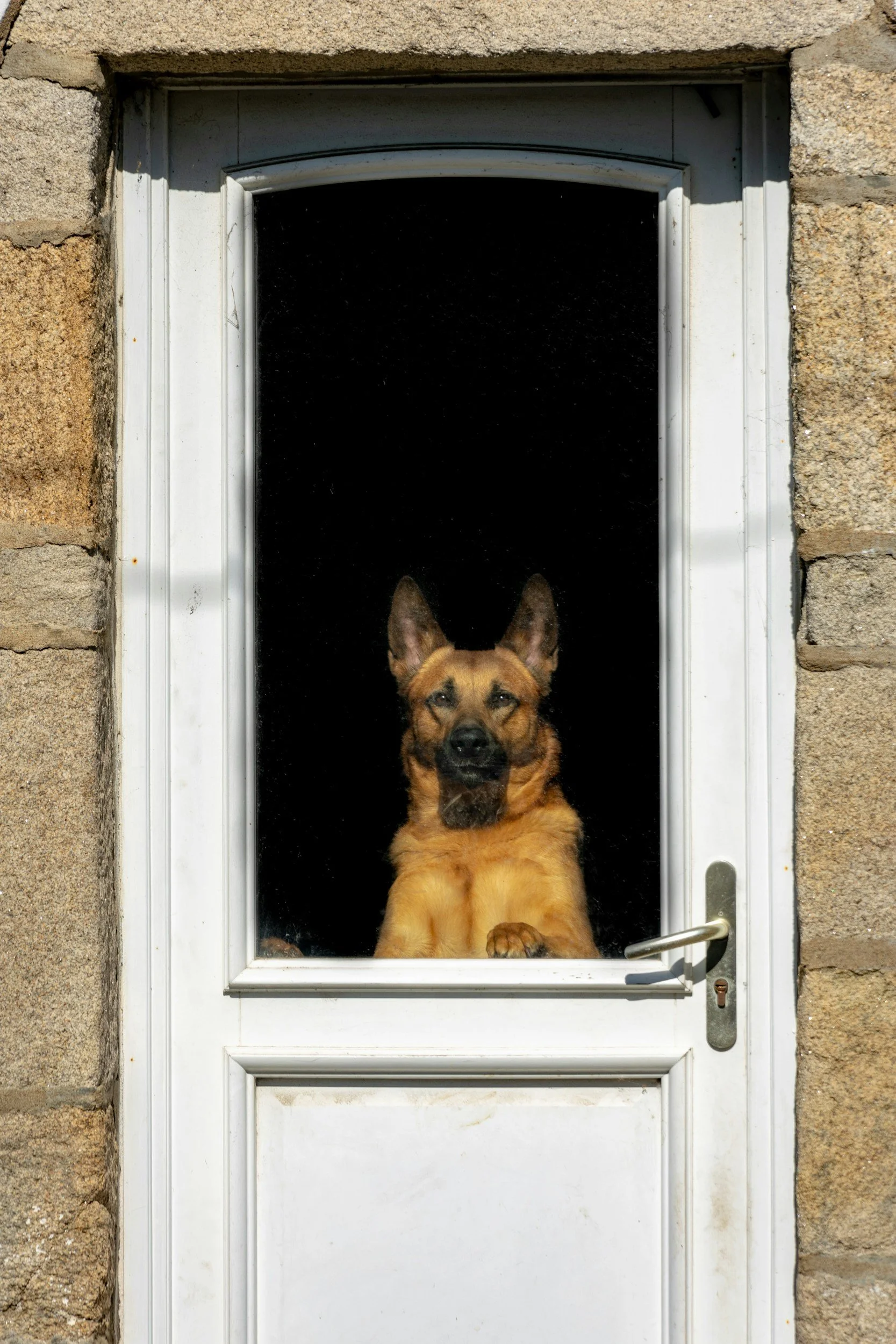
Dogs filter and move to more relevant sounds and triggers.
So let’s say you do your diligent work. You pick up your keys 100 times. Will your dog learn that the keys aren’t relevant? Absolutely. But they’ll also learn that the sound of your keys in the door is relevant - and they’ll learn to tell the difference. So, again - you do your counter conditioning and put your keys in the door 100 times. Will your dog learn to chill about the keys? probably. Will they learn to chill generally? Absolutely not. Because they keys may not be relevant, regardless of whether or not they’re in the lock. But when you walk through the door and put them back in, and lock the door? That is relevant. And you can play this game as much as you want - swing the garden gate, lock and unlock your car, open and close the car doors, turn the engine on and off. Hell - drive up and down the street a bunch. But your dog will absolutely filter down what matters - the one thing you can fake - and they will still bark. Because when you come home, or when anyone else comes through that door - you will reinforce the state of mind you left them in. That wild eyed, panty, stressy face that you cover in kisses and apologies - reinforced. That bear hug that your brother in law does that makes the dog go crazy? reinforced. That anxious mother who never owned dogs, who starts screaming “down! down!” and spinning around and making everything worse when the dog jumps up? Reinforced.
Counter Condition the right things. Change your greeting.
In the back of my mind, there’s always a slightly harumphy academic who reads these articles and gets their PhD in a twist. So for once, I need to be fair and say that if we are being honest, counter conditioning does work - if you condition the right things in the right way.
When it comes to Learned Separation Anxiety, the value is in changing the way people reunite. The easiest way to do it, that everyone hates, is to just not greet your dog when you come through the door. Outrageous I know - but the truth is that dogs greet with the nose, and humans greet with eyes and ears - and we teach our dogs to do the same to us, and in doing so get incredibly excited and stressed. The easiest, selfless way to calm things down is to walk through the door silently, without eye contact - and let your dog calmly sniff you. But no one ever listens to me when I say that.
So I have a rule. When you come home - Shoes off, coat off, bag down, kettle on. Move the excitement and the greeting away from the door and wait until after the kettle is boiled before saying hello. Greet your partner, say hello to the kids, breathe a little. Give your dog to time to quietly and calmly adjust before you say hello. And when you do, be respectful. Be calm, be gentle - don’t offload all of your stress into your dogs ears and fur because it makes you feel better.
Make the door a calm, uneventful place - in both directions.
I know it isn’t easy - but dogs know how we feel. Everything we feel, all the time. So when you do leave, don’t do it in a rush or a panic, with stress or urgency. Don’t let your dogs follow you around the house whilst you’re looking for your glasses and your car keys - ask them to go and lie down on a bed so they aren’t part of your chaos. And when you leave - take a moment to breathe. So that they don’t see someone walking out the door who they think needs help to stabilise, or someone who is inviting them to follow.
Place Work helps too.
It’s one of the foundational peaces I teach in my Separation Anxiety Programme - independent relaxation - and it’s worth its wait in gold for asking your dog to relax when they’re getting elevated. The basic principle that you should always know what you want your dog to do when telling them what not to do matters.